

 Filippos Germanis was awarded a doctorate, summa cum laude, in Theology at the Aristotle University of Thessaloniki (AUTh) in 2014. His doctoral dissertation entitled The Patriarch of Constantinople Euthymius I (907-912). Life and Work, has been published by the Center for Byzantine Research of the Aristotle University of Thessaloniki, and has been included in the series Byzantine Texts and Studies 63. In addition, he has received a Master’s degree with distinction from the School of Pastoral and Social Theology of Aristotle University of Thessaloniki, (now renamed the School of Social Theology and Christian Culture), on the Thesis Monasticism in the life and teaching of St. Gregory the Theologian. In 2003 he graduated from the School of Pastoral and Social Theology of the Aristotle University of Thessaloniki. Throughout his postgraduate studies he was a scholarship holder of Greek and international programs.
Research activity
Between 2019 and 2020 he was a fellow researcher for the Hellenic Institute of Byzantine and Post-Byzantine Studies in Venice on the subject of research on the person and work of Pachomios Rousanos (1508-1553) and in particular his work: On the benefit of the Holy Scriptures. As part of this research, a conference was organized on the topic: Interpretation and use of the Scriptures in the 16th century. The case of Pachomios Rousanos (1508-1553), whose minutes are to be published.
In addition, in 2019 he was a scientific collaborator of the School of Pastoral and Social Theology of the Aristotle University of Thessaloniki in the project: The Common Hellenistic Language of the Holy Bible and its cultural dimension.
In 2017 he was a scientific collaborator of the School of Theology of AUTh in the project: The Patriarch of Constantinople Euthymius I (907-912). Life and Work. Critical evaluation of the research findings and their publication.
In the years 2016 – 2017, in addition, he was a scholarship holder – postdoctoral researcher for the Research Committee of the Aristotle University of Thessaloniki on the subject of research: Euthymius I, Patriarch of Constantinople (907-912). Edition of eulogy to the deposit of Honest Zone of the Virgin Mary, the Theotokos (31 Aug.) on the basis of the code of the Holy Monastery of Vatopedi 765.
Finally, in 2015 he was a research associate of the School of Pastoral and Social Theology of the School of Theology of the Aristotle University of Thessaloniki in the project: The Vocabularies of the Apostle Paul. Semantic and Cultural interpretive analysis of special lexical terms within the Pauline Corpus.
Conferences and scientific publications
Germanis F., The Patriarch of Constantinople Euthymius I (907-912). Life and Work, [Byzantine Texts and Studies 63], Thessaloniki: Center for Byzantine Research 2017.
Germanis F., Monasticism in the life and teaching of St. Gregory the Theologian, Thessaloniki 2008.
Germanis F. “The social contribution of the monks according to St. Gregory the Theologian”, Monasticism. Historical and Theological Approaches, [Theological Interventions 6], Idalio – Cyprus: Holy Metropolis of Trimythous 2022, pp. 93-110.
Germanis F., “Unedited canon to the Virgin Mary, the Theotokos, by Euthymios I of Constantinople (?)”, Parekbolai 3 (2013) 131-144.
Germanis F., “Euthymius the Protoasikritis. The person and his writings”, Βυζαντινά 32 (2012) 271-283.
Germanis F., “Euthymios I patriarch of Constantinople (907-912). Edition of eulogy to the deposit of Honest Zone of the Virgin Mary, the Theotokos (31 Aug.) on the basis of the code of the Holy Monastery of Vatopedi 765”, [under publication].
Germanis F., “About the Divine Scriptures of Benefit”, Conference Recruitment and use of the Scriptures in the 16th century. The case of Pachomios Rousanos (1508-1553) (Hellenic Institute of Venice 21.12.2020), [under publication].
 Petros Toulis was born in Arnissa, Pella, Greece. He studied Theology at the Department of Theology at the Aristotle University of Thessaloniki, from which he was awarded a Doctorate in Theology with a specialization in Dogmatics in 2013. As a Post Doctoral Fellow of the Hellenic Institute of Byzantine and Post-Byzantine Studies in Venice during the year 2019–2020, he conducted research titled: “Unionistic efforts in the Palaeologan era: Interpreting the Hesychast Controversy during the preparation of an Ecumenical Council. Theophanes of Nicaea and the Latin Archbishop of Constantinople Paul.” His academic interests include the history and development of dogmas, the study of the Dogmatic and Symbolic texts of the Orthodox Church, as well as the study and critical edition of texts from the Palaeologan period concerning the relations between East and West.
Selected works
Η χρήση και η ερμηνεία του όρου «Υπόστασις» στα πρακτικά των Οικουμενικών Συνόδων. Από την Νίκαια (325) στη Χαλκηδόνα (451) , Θεσσαλονίκη, Ostracon publishing, 2023 (ISBN: 978-618-5518-30-1), σσ .177
Η αναίρεση των επιδράσεων του Θωμά Ακινάτη στη Βυζαντινή θεολογία του ΙΔ΄ αιώνα. Collecta Academica II, Θεσσαλονίκη, Ostracon publishing, 2014. (ISBN: 978-618-81197-2-7 ), σσ.1-183.
«Interpreting the Hesychast Controversy during the preparation of an Ecumenical council. Theophanes of Nicaea and the Latin Archbishop of Constantinople Paul» , στο Christos Arambatzis-Petros Toulis (eds), ‘Unionistic efforts in Palaeologan era. From Lyon to Florence. Atti della giornatta di Studi. Istituto Ellenico di Studi Bizantini e Post-Bizantini di Venezia, Venezia 2023, σσ. 94-137
«H Ησυχαστική θεολογία στο έργο του αγίου Γενναδίου Σχολαρίου», στο Πρακτικά Διεθνούς Συνεδρίου “Άγιος Γεννάδιος Σχολάριος μεταξύ Ανατολής και Δύσης”, Μπαρμπουνάκης 2023, σσ. 277-287. (ISBN: 978-960-267-540-3)
“Reception and interpretation of the Patristic Tradition in Theophanes’ of Niceae works”, Studia Patristica. Vol. CXXIX,Peeters 2021, σσ. 341-352 (ISBN 978-90-429-4786-3
Studies
Dimitrios Roumpekas has a pHD on Ancient Greek Philology and Papyrology in the National and Kapodistrian University of Athens. He has B.A. and M.A. degrees in Classics and Papyrology from the University of Ioannina. His Ph.D thesis, entitled «The health system in Greco-Roman and Byzantine Egypt in the light of the papyri», is to be published soon. His scientific interests concern the edition, language and commentary of the literary and documentary papyri, ancient Greek and Byzantine medical literature and specific thematic such as disease and cure in Greco-Roman and Late Antiquity.
Current research activity
During his research conducted in the Hellenic Institute of Byzantine and Post-Byzantine Studies in Venice, he’s working on the veneration of miraculous holy fathers and healing saints in Byzantine Egypt in the light of the hagiological, papyrological, and epigraphic sources. He is on the forms that the cult of saints received in the Nile country, from the third to the eighth century: prayers, amulets, oracles, hymns and encomia, churches, monasteries, and charitable institutions devoted to healing saints or saints related to the care of the sick and poor, as well as holy icons, oblations, and celebrations, dedicated to therapeutic saints.
Conferences and scientific publications
Dimitrios Roumpekas, “The xenodocheion of Saint Ioustus at Oxyrhynchus”, Medioevo Greco 22 (2022). [forthcoming]
Dimitrios Roumpekas, “Ὠιὸν δίδυμον (P. Cair. Zen. IV 59602, IIIa, Philadelphia): Some remarks”, Analecta Papyrologica33 (2021). [forthcoming]
Studies
Angelos Zaloumis is a joint PhD student in Byzantine Philology and Philosophy at the University of Patras, Greece and the École Pratique des Hautes Études, PSL, France in the scientific field Religions and System Thoughts. The aim of his doctoral research is a critical edition of Demetrios Cydones’ (c. 1320/25 – 1397/98) Greek translation of Thomas Aquinas’ Summa Theologiae, IIaIIae and moreover, the study of its perception in the Late Byzantine world.
Current research
He is a Research Fellow at the Hellenic Institute of Byzantine and Post-Byzantine Studies of Venice. Aim of his current research is to examine aspects of Byzantine Thomism and the reception of Cydones’ translation as well as the reception of Thomistic ethics in Late Byzantium, and in particular in Gennadios Scholarios’ thought and works.
Conferences and scientific publications
Zaloumis A., «Thomas Aquinas’ Summa contra Gentiles as the Source of the Moral Intellectualism in John VI Cantacuzenus’ Contra Mahometem Disputatio ΙΙ (Κατὰ τοῡ Μωάμεθ λόγος δεύτερος)», Tasting the Lotus’: Reception of and Reaction to the Transmission of Latin Works in Byzantium, (Online conference, 31.07 – 01.08.2021).
Zaloumis A., «Demetrios Kydones’ Greek Rendering of Aristotelian Ethical Terms in Thomas Aquinas’ Summatheologiae, IIaIIae», International Conference Translation Activity in Late Byzantium (Ca’ Foscari University of Venice, 11 – 13.06.2018).
Ζαλούμης Ά., «Το ιδεώδες της ελευθερίας της θρησκευτικής συνείδησης στο αυτοβιογραφικό έργο του Δημήτριου Κυδώνη (περ. 1325 – 1397/8)», Ημερίδα Ξεφυλλίζοντας το Βυζάντιο ΙΙ: Χειρόγραφα, Κείμενα, Ιδέες (University of Patras, 05.05.2014).
Zaloumis A., «Demetrios Kydones’ Greek Rendering of Aristotelian Ethical Terms in Thomas Aquinas’ Summatheologiae, IIaIIae», Translation Activity in Late Byzantium: An International Conference (11-13.06.2018). [forthcoming: Byzantinisches Archiv – Series Philosophica, vol. 4, Berlin/Boston, De Gruyter]
Studies
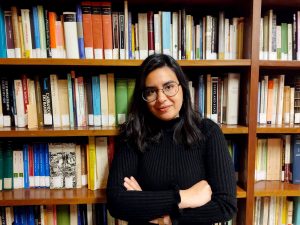
Marialena Alexiadi is a graduate of Greek Philology from the National and Kapodistrian University of Athens, specializing in classical studies. In 2018 she received her ΜΑ degree from the Department of Social Theology and Christian Culture of the Aristotle University of Thessaloniki, with grade “excellent”. In her dissertation she dealt with the policy of the Roman Empire towards Christians during the 3rd century.
She is a PhD candidate at the School of Education of the University of Crete. In her dissertation she is studying the Neon Leimonarion (Venice, 1819) from a historical-philological, theological and pedagogical point of view.
Current research activity
Marialena Alexiadi is a fellow researcher at the Hellenic Institute of Byzantine and Post-Byzantine Studies in Venice, for the year 2021-2022. He works mainly in the Library of St Marc of Venice. Specifically, he studies manuscripts of hymnological and hagiological content (martyrdoms, biographies, hymns, stories of miracles) comparing them with similar material from the Vatican Apostolic Library. Her purpose is to gather information about the worship and miracles of the Saints included in the Neon Leimonarion, to examine variations of their Lives in other manuscripts and to locate the sources of the book. Furthermore, she collects editions of the book she’s studying and the hagiology of the cult in the Venetian world in general.
Conferences and scientific publications
Alexiadis M., The policy of the Roman Empire towards Christians during the 3rd century, Thessaloniki 2020. [in Greek]
Alexiadis M., «The spread of Christianity in Cyprus during Roman rule on the island», in: A. Mastrapas, M. Stergioulis (eds.), Proceedings of the 45th Annual Cyprus Conference: History and Culture, (Seminar of the Panhellenic Union Friend Greek Cypriot Philologists (Athens, 8-10 November 2018), volume A΄, Athens 2022. [in Greek]
Studies
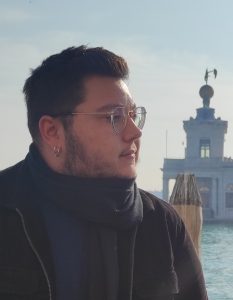
Panagiotis Makris is a PhD candidate in Byzantine History at the Department of History of the Ionian University. His doctoral research examines the perception of the body and the conception of illness, healing and death in the scholars of late Byzantium (1204-1453). His academic interests are particularly oriented to the social and cultural history of the Byzantine world.
Current research activity
Panagiotis Makris is a fellow researcher at the Hellenic Institute of Byzantine and Post-Byzantine Studies in Venice. His research is entitled “A Byzantine scholar in the years of the plague: illness and death in the work of Dimitrios Kidonis (1324-1397)” and it is part of the conceptual history of 14th century Byzantium. His research aims to investigate the reception and semantics of the concepts “disease”, “cure” and “death” by the Byzantine scholar and official Dimitrios Kidonis (1324-1397) but at the same time, expands to a global approach of all ideologies and social perceptions related to them. The research is part of the wider scientific field of Byzantine Studies and in particular in the context of the study of mentalities during the Palaeologian Renaissance.
Conferences and scientific publications
Makris Panagiotis, «The Perception of the Plague of the Years 1348-1348 by the Society of Constantinople: A Psychosocial Approach to the Sources of the Time», Byzantinοs Domοs, 30(2022). [In Greek, forthcoming]

Studies
Argyrò Gkanali is a PhD candidate in History at the Department of History and Archeology of the School of Philosophy of the National and Kapodistrian University of Athens. Her doctoral dissertation examines the wide range of Venice’s relations with the representatives of the Latin Church in Crete in the first half of the 17th century and specifically after the Interdetto (1606), which meant the culmination of the ongoing conflict between the two states during in the early modern period.
Current research activity
During the academic year 2021-2022, Argyrò Gkanali is a fellow researcher at the Hellenic Institute of Byzantine and Post-Byzantine Studies in Venice. Her dissertation is entitled “Relations between the State and the Church in Venetian Crete after the Interdetto: the state supervision of ecclesiastical property”. It deals with the state supervision over the Orthodox and Latin ecclesiastical institutions under public law (ius patronato pubblico) but also the activity of the latter towards the state, such as the donations, informing about the movements of the Ottomans, that posed a risk to the Venetian interests – especially, of her possessions in Candia. She is basing on unpublished archival material found in the State Archive of Venice (Archivio di Stato di Venezia). Her research concerns the period 1620-1640.
Conferences and scientific publications
Gkanali Argyrò & Kapodistrias N., «The path to the Revolution: the Greek space through the correspondence of the Venetian officials of the East (late 18th century)», Two-day conference presenting the research programs of the University of Athens for the Revolution of 1821 (Athens, 1 December 2021). [in Greek]
Gkanali Argyrò, «Creta veneziana tra la Santa Sede e il Patriarcato ecumenico: l’invio di libri religiosi di Cirillo Loukaris», Seminar of young researchers at the Società Italiana per la Storia dell’Età Moderna / SISEM, (Bologna, 7-8 April 2022).